














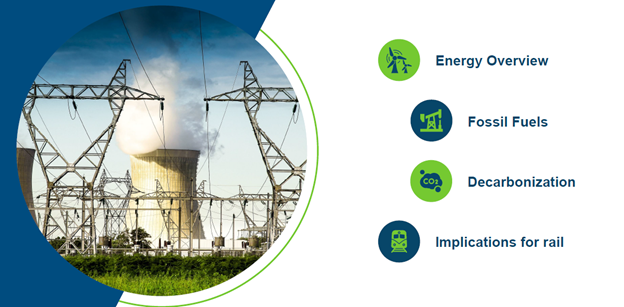
Recently, at the prestigious 2024 Rail Equipment Finance Conference, PLG Consulting’s CEO, Graham Brisben, delivered a keynote presentation that shed light on the critical role of rail transportation in the evolving energy landscape. Drawing on the expertise and insights of PLG Consulting’s industry veterans, Graham highlighted key trends and opportunities in energy-related rail transportation, emphasizing the importance of sustainable practices and efficient logistics in driving the industry forward. The presentation provided a comprehensive overview of the four key themes, including:
 Introduction
As a respected thought leader in the field, PLG Consulting continues to lead the conversation on innovative solutions and strategic approaches to meet the changing demands of the rail industry. In our latest report, “The Energy Value Chain: Opportunities for Rail,” we summarize original research findings and offer valuable perspectives on navigating the complexities of the energy transition. The summary seeks to highlight and answer the following questions:
- What specific trends and opportunities were highlighted in the Rail Equipment Finance Conference keynote presentation?
- What are the key takeaways from the comprehensive report by PLG Consulting?
Key Takeaways:
This 65-slide presentation outlines specific data and trends across today’s dynamic energy landscape, discussing coal, oil and gas, LNG, NGLs, chemicals, decarbonization, renewable diesel, energy transition materials (ETMs), hydrogen & ammonia, carbon capture & sequestration sectors and their implications for rail. Here are some key takeaways highlighted:
- Coal consumption in the US has been declining due to lower shale gas costs and renewables’ expansion. However, exports are becoming an important market for US thermal coal producers.
- Renewable energy sources are growing in market share while prices have stabilized following recent black swan events. Renewables are primarily used for electricity generation.
- Fossil fuels continue to supply a significant portion (around 80%) of US energy needs. Crude oil is converted into transportation fuels, while natural gas is used for electricity generation and chemical feedstocks.
- The US shale revolution has driven a surge in the domestic production of oil and gas, making it an energy export powerhouse. Oil and gas production in the US has reached all-time records, making it the world’s largest producer and exporter of crude oil.
- The US is also a significant exporter of refined products such as diesel fuel, critical in offsetting Russian crude previously refined in Europe.
- The US has become a top LNG exporter due to abundant natural gas production combined with LNG terminal build-out. LNG exports have been driven by sudden demand in Asia (Fukushima) and geopolitical events like Russia’s invasion of Ukraine.
- The rise of renewable energy has led to a surge in the production and export of Natural Gas Liquids (NGLs), particularly ethane and propane, positioning the U.S. as a major exporter of these essential energy commodities.
- The export orientation of PE plants and other projects has significantly influenced the chemicals trade balance, bolstering North America’s position as a globally advantaged chemical production hub set to endure for decades. Leveraging low-cost natural gas and NGL feedstocks has enhanced domestic polyethylene production and catalyzed growth in other commodity sectors like fertilizers, underscoring the region’s competitive edge in the chemical industry.
- The transition towards decarbonization is driving a fundamental shift in the energy landscape, with a notable increase in the adoption of renewable energy sources and sustainable practices. Countries worldwide are implementing strategies to reduce carbon emissions, with varying degrees of progress and commitment. As the focus on decarbonization intensifies, industries are exploring innovative solutions such as carbon capture and sequestration to mitigate greenhouse gas emissions and advance towards a more sustainable future.
- Green hydrogen development is gaining momentum, with significant investments in infrastructure and technology to support its production, emphasizing the importance of renewable electricity sources and electrolyzers in unlocking its full potential as a clean energy carrier.
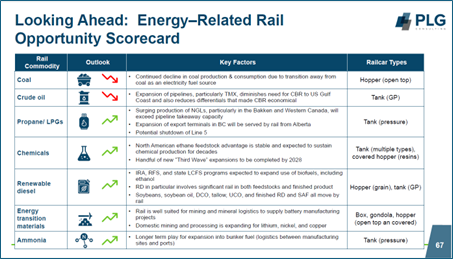
- Our report highlights opportunities for rail transportation related to various commodities such as renewable diesel (RD), propane/LPGs, chemicals, renewable energy materials (e.g., lithium, cobalt), ammonia, and coal decline.
- The shift towards renewable energy sources is reshaping the types of commodities transported by rail, with a notable increase in the transportation of renewable diesel, hydrogen manufacturing materials, and energy transition materials like lithium, nickel, and copper – critical materials for battery manufacturing.