














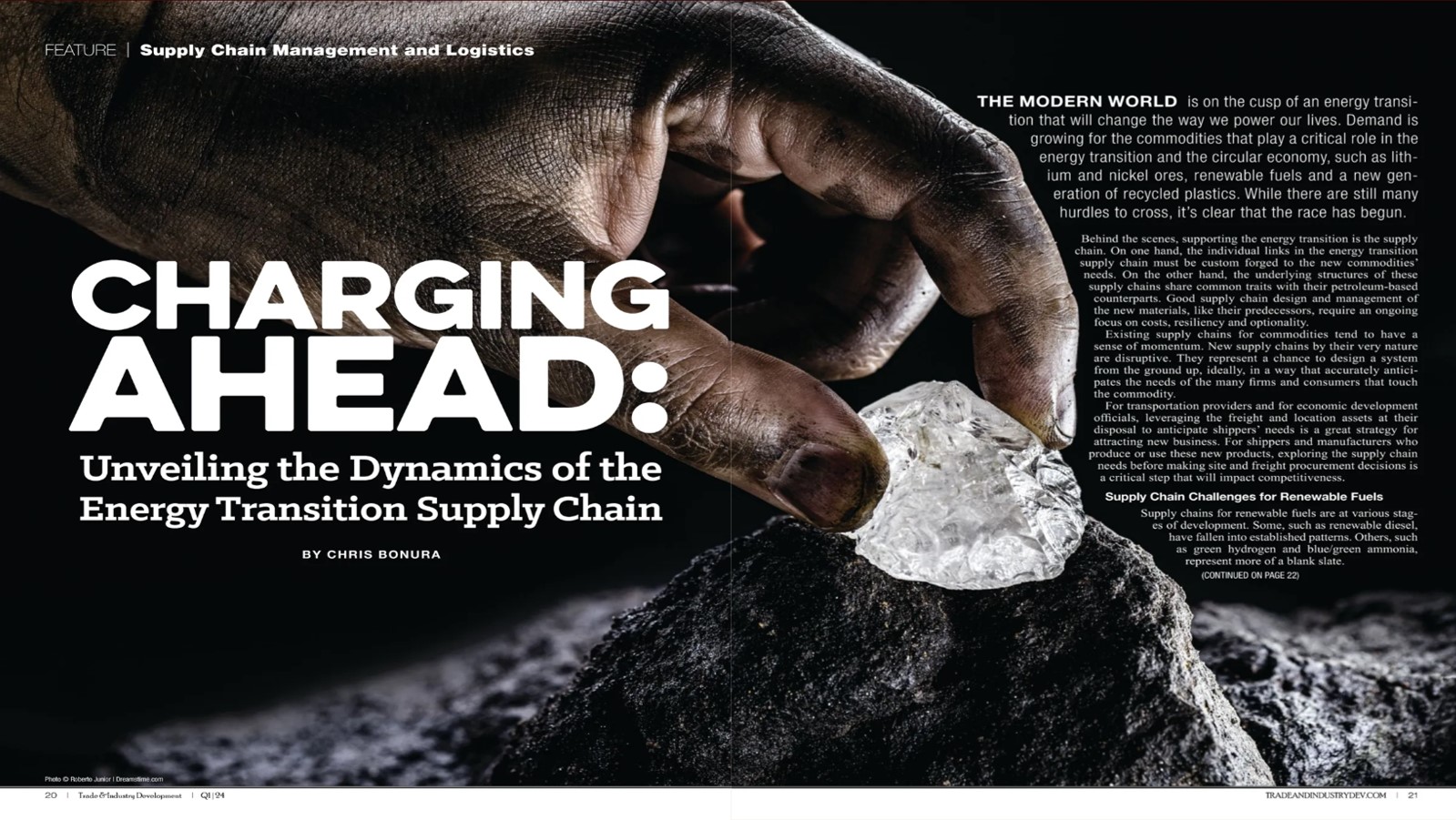
The modern world is on the cusp of an energy transition that will change the way we power our lives. Demand is growing for the commodities that play a critical role in the energy transition and the circular economy, such as lithium and nickel ores, renewable fuels, and a new generation of recycled plastics. While there are still many hurdles to cross, it’s clear that the race has begun.
Behind the scenes supporting the energy transition is the supply chain. On the one hand, the individual links in the energy transition supply chain must be custom forged to the new commodities’ needs. On the other hand, the underlying structures of these supply chains share common traits with their petroleum-based counterparts. Like their predecessors, good supply chain design and management of the new materials require an ongoing focus on costs, resiliency, and optionality.
Existing supply chains for commodities tend to have a sense of momentum. New supply chains, by their nature, are disruptive. They represent a chance to design a system from the ground up, ideally in a way that accurately anticipates the needs of the many firms and consumers that touch the commodity.
“For transportation providers and economic development officials, leveraging the freight and location assets at their disposal to anticipate shippers’ needs is a great strategy for attracting new business. For shippers and manufacturers who produce or use these new products, exploring the supply chain needs BEFORE making site and freight procurement decisions is a critical step that will impact competitiveness.”, says Chris Bonura, PLG Consulting’s Client Services Director.
Bonura offers Trade and Industry Development readers a view of these energy transitions by discussing three areas: 1) renewable fuels, including renewable diesel, sustainable aviation fuel, and green hydrogen; 2) battery materials supply chain; and 3) plastic waste issues. He discusses the vast opportunity for transportation and logistics service providers and manufacturers and the challenges facing these markets. “It is that constant feedback loop of designing, maintaining, and improving supply chains that will be a central task needed to create the circular economy.“, Bonura says.
To read the full article, click here.